
Mastering financial management strategies in gambling for long-term success
Deconstructing the Noise: Identifying the Subtle Strongholds Targeting Your Child
In Week 1, we pulled back the curtain to see the spiritual reality behind modern culture. We established that media, trends, and secular philosophies are not spiritually neutral, but part of a broader battle for our children’s hearts and minds.
This week, we are moving from the macro view to the micro view. What does this battle actually look like in everyday life?
The enemy rarely approaches our children with an obvious, aggressive attack. Instead, modern secularism works through quiet, persistent whispers—subtle cultural narratives that gradually reshape how our kids view themselves, authority, and God.
As the Apostle Paul warns us:
“See to it that no one takes you captive through hollow and deceptive philosophy, which depends on human tradition and the elemental spiritual forces of this world rather than on Christ.”
— Colossians 2:8
To protect our children, we must first learn to recognize these “deceptive philosophies” when they enter our homes.
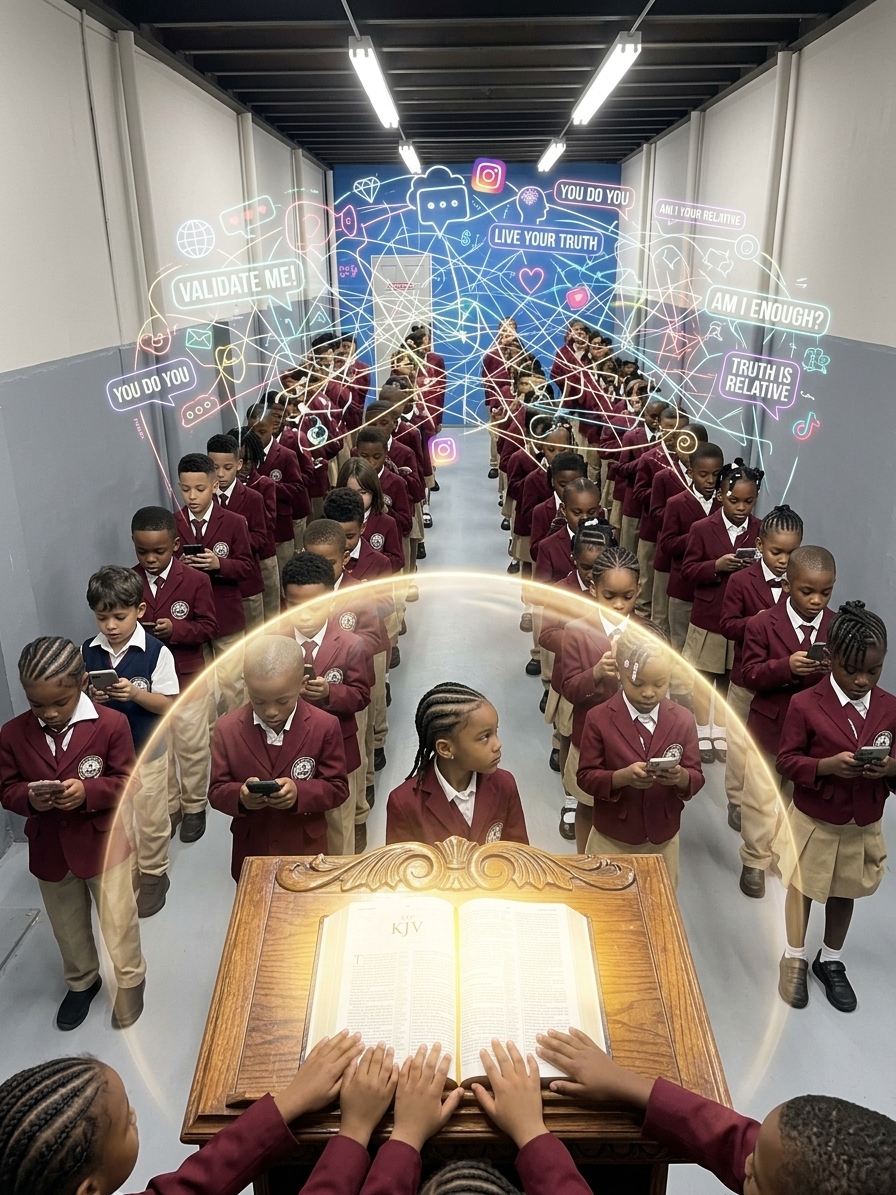
3 Subtle Cultural Strongholds Targeting the Next Generation
A “stronghold” is a pattern of thinking or a false belief system that sets itself up against God’s truth. Today’s culture promotes three primary strongholds through social media, streaming content, and peer pressure:
1. “You Do You” (The Lies of Individualism & Relative Truth)
-
The Cultural Narrative: “You are the sole author of your life. Live your truth, define your own morality, and don’t let anyone tell you who you are.”
-
The Underlying Danger: While this sounds empowering, it places an crushing burden on children. When truth becomes relative, right and wrong become personal preferences rather than divine standards. Kids are left anchorless, floating on whatever emotional wave or social trend is popular at the moment.
-
The Biblical Truth: Truth is not something we invent; it is Someone we follow. Jesus said, “I am the way, the truth, and the life” (John 14:6). Freedom doesn’t come from defining our own truth, but from surrendering to God’s absolute truth.
2. “You Are What You Perform” (The Trap of Digital Validation)
-
The Cultural Narrative: “Your worth is measured by your visibility, your follower count, your appearance, and how well you curate your online persona.”
-
The Underlying Danger: This stronghold breeds severe anxiety, comparison, and identity confusion. When a child’s self-worth is tied to digital algorithms and peer approval, a missing ‘like’ or negative comment can feel like total rejection.
-
The Biblical Truth: Identity is received, not performed. Before we ever accomplish anything or post a single image, God declares us fearfully and wonderfully made (Psalm 139:14). Our children need to know that their value was settled at the Cross, not in a comment section.
3. “Boundaries Are Oppressive” (The Resistance to Godly Authority)
-
The Cultural Narrative: “Any rule, biblical standard, or parental boundary that limits your desires is toxic or unloving.”
-
The Underlying Danger: This mindset subtly turns children against God’s Word, parental guidance, and godly mentors, framing obedience as a loss of freedom rather than a form of protection.
-
The Biblical Truth: God’s boundaries are not designed to restrict our joy, but to protect it. Psalm 16:6 reminds us, “The boundary lines have fallen for me in pleasant places; surely I have a delightful inheritance.”
Practical Application: How to Counter the Noise at Home
We cannot simply pull our children out of the world, nor should we want to. Jesus prayed that His followers would be in the world, but not of it (John 17:15–16). Instead of insulating them, we must isolate the lie and elevate the truth.
    [ Recognize the Lie ] ──> [ Ask Guiding Questions ] ──> [ Anchor in God's Word ]
            │                         │                             │
    Identify subtle         Help your child evaluate       Replace false cultural
    cultural messages       what they see/hear online      narratives with Scripture
1. Practice “Media Deconstruction” Together
When watching a movie or listening to a song with your child, don’t just consume it passively. Ask:
-
“What is this story telling you about what makes a person valuable?”
-
“Is that message line up with what God says about you?”
2. Guard the Heart with Scripture (Romans 12:2)
“Do not conform to the pattern of this world, but be transformed by the renewing of your mind.”
— Romans 12:2
Encourage your child to memorize key scriptures about identity and truth. A mind filled with God’s Word automatically detects cultural counterfeits.
5 Discussion Questions for the Dinner Table
-
On Identity: How does the pressure to fit in online make you or your friends feel about yourselves?
-
On Truth: Have you ever felt confused by people saying “everyone has their own truth”? What makes God’s truth different?
-
On Media: What is one message you hear constantly in music or videos that seems normal, but goes against what we read in the Bible?
-
On Boundaries: Why do you think God gives us rules in the Bible? Are they meant to keep us from fun, or keep us safe?
-
On Home: How can our family do a better job of renewing our minds during the week instead of being shaped by social media?
A Prayer for Parents This Week
Heavenly Father,
Give us eyes to see the subtle philosophies that are trying to capture the hearts of our children. Give us wisdom to speak truth with grace, patience to listen without rushing to judgment, and strength to set loving, godly boundaries in our homes. Help us raise a generation that is unashamed of the Gospel and rooted in Your unshakable truth. In Jesus’ name, Amen.